2026-03-29 18:57:17
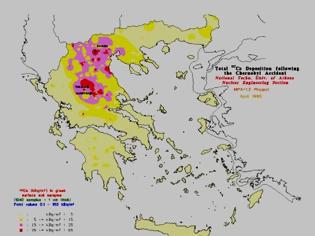
Συνολική απόθεση Cs-137 στην Ελλάδα μετά το ατύχημα του Chernobyl
Ο χάρτης αυτός έχει χαραχθεί χρησιμοποιώντας δημοσιευμένη μεθοδολογία [Petropoulos et al., 1996] , με βάση δεδομένα από τη Συλλογή Δεδομένων ΕΜΠ [Simopoulos, 1989]. Ο κ. Σιμόπουλος έφτιαξε, μετά από μετρήσεις που διήρκεσαν σχεδόν δυο μήνες, τον πρώτο ραδιενεργό χάρτη της Ελλάδας. Στην περιοχή της Καρδίτσας και συγκεκριμένα στο χωριό Άγιος Θεόδωρος, σε μια έκταση ...σε μια έκταση περίπου 4 χιλιομέτρων, υπήρξε η μεγαλύτερη συγκέντρωση ραδιενέργειας. Υψηλή ραδιενέργεια είχε εντοπιστεί επίσης, σε μια περιοχή κοντά στο Λιτόχωρο, αλλά και κοντά στη Νάουσα. Μετά από πολύχρονες έρευνες διαπίστωσαν ότι η υψηλή ραδιενέργεια σε αυτές τις περιοχές οφειλόταν στις βροχοπτώσεις εκείνης της περιόδου.Η ραδιενέργεια επηρέασε κυρίως τη Βόρεια Ελλάδα και τη Θεσσαλία. Το ραδιενεργό σύννεφο κινούνταν χαμηλά και έτσι ο Όλυμπος και άλλοι ορεινοί όγκοι προστάτεψαν κάποιες περιοχές, όπως την Ήπειρο και την και την Κρήτη
. Μετρήσεις που έγιναν δυο δεκαετίες μετά το πυρηνικό ατύχημα, έδειξαν ότι οι εκπομπές του ραδιενεργού καισίου σε διάφορες περιοχές της Ελλάδας έφταναν τα 65 κιλομπεκερέλ ανά τετραγωνικό με το όριο επικινδυνότητας να βρίσκεται στα 5 κιλομπεκερέλ. Αυτό συνέβη γιατί το καίσιο χρειάζεται περίπου 35 χρόνια για να αυτοκαταστραφεί, ενώ κατά άλλους επιστήμονες 80 χρόνια Right after the Chernobyl reactor accident a systematic soil sampling and analysis programme has been undertaken by the Nuclear Engineering Section of the National Technical University of Athens in order to detect and quantitatively analyse the long-lived isotopes in the Chernobyl fallout in Greece. In the frame of this programme, 1242 soil samples of 1cm thick surface soil were collected over Greece during the period May - November 1986. The samples were counted and analysed using Ge-detector setups for fission products from the Chernobyl fallout, which led to the mapping of Cs-137 deposition in the form of a five-class histogram, extending between 0 - 150 kBq/m², with boundaries defined by isolines of 5, 15, 35, 65 & 150 kBq/m². To investigate the radiological impact of the Cs-137 fallout on the Greek population, the NEA/OECD computer code PABLM was run using as input the above isoline data. According to the results obtained, the total body collective effective dose commitment of the Greek population is estimated to 340 manSv over the first year after the accident and 8800 manSv over a period of 40 years. Concerning the 6000 inhabitants within the 65 kBq/m² isoline the results are 2 manSv over the first year after the accident and 55 manSv over a period of 40 years. The above radiological impact was further compared to that due to fly ash releases from the Ptolemais Lignite Power Plants, in northern Greece.
Πηγες:http://arcas.nuclear.ntua.gr/arcas/publications/j007.el.html
http://arcas.nuclear.ntua.gr/arcas/publications/j007.el.html
https://www.mixanitouxronou.gr/to-tsernompil-stin-ellada-o-agnostos-chartis-me-tis-perioches-poy-epirease-prota-ekanan-kathisychastikes-diloseis-kai-meta-xekinisan-metriseis-vinteo/
tinanantsou.blogspot.gr
Ο χάρτης αυτός έχει χαραχθεί χρησιμοποιώντας δημοσιευμένη μεθοδολογία [Petropoulos et al., 1996] , με βάση δεδομένα από τη Συλλογή Δεδομένων ΕΜΠ [Simopoulos, 1989]. Ο κ. Σιμόπουλος έφτιαξε, μετά από μετρήσεις που διήρκεσαν σχεδόν δυο μήνες, τον πρώτο ραδιενεργό χάρτη της Ελλάδας. Στην περιοχή της Καρδίτσας και συγκεκριμένα στο χωριό Άγιος Θεόδωρος, σε μια έκταση ...σε μια έκταση περίπου 4 χιλιομέτρων, υπήρξε η μεγαλύτερη συγκέντρωση ραδιενέργειας. Υψηλή ραδιενέργεια είχε εντοπιστεί επίσης, σε μια περιοχή κοντά στο Λιτόχωρο, αλλά και κοντά στη Νάουσα. Μετά από πολύχρονες έρευνες διαπίστωσαν ότι η υψηλή ραδιενέργεια σε αυτές τις περιοχές οφειλόταν στις βροχοπτώσεις εκείνης της περιόδου.Η ραδιενέργεια επηρέασε κυρίως τη Βόρεια Ελλάδα και τη Θεσσαλία. Το ραδιενεργό σύννεφο κινούνταν χαμηλά και έτσι ο Όλυμπος και άλλοι ορεινοί όγκοι προστάτεψαν κάποιες περιοχές, όπως την Ήπειρο και την και την Κρήτη
Πηγες:http://arcas.nuclear.ntua.gr/arcas/publications/j007.el.html
http://arcas.nuclear.ntua.gr/arcas/publications/j007.el.html
https://www.mixanitouxronou.gr/to-tsernompil-stin-ellada-o-agnostos-chartis-me-tis-perioches-poy-epirease-prota-ekanan-kathisychastikes-diloseis-kai-meta-xekinisan-metriseis-vinteo/
tinanantsou.blogspot.gr
ΜΟΙΡΑΣΤΕΙΤΕ
ΔΕΙΤΕ ΑΚΟΜΑ

ΣΧΟΛΙΑΣΤΕ